Friday, August 14, 2015

The Complete Alice, by Lewis Carroll

On a hot summer's day in July 1862, two reverend gentlemen rowed three little girls in a jolly boat down an Oxford river. To pass time one of the  gentlemen, mathematician Charles Lutwidge Dodgson, told the Liddell  girls a charmingly nonsensical tale about a young girl (he later called Alice) who fell down a rabbit hole and had the most amazing topsy-turvy adventures.  It was the middle girl, also called Alice, who was so taken with the story that she begged him to record it all for her. So, in 1864, Dodgson presented the girl with a handwritten copy entitled Alice's Adventures under Ground, of which he'd meticulously written and illustrated himself.

A year later, after adding two new episodes featuring the Cheshire Cat and the Mad Hatter, and with black-and-white illustrations by Punch cartoonist John Tenniel, the book Alice's Adventures in Wonderland was published, with Dodgson using the pseudonym "Lewis Carroll" - the Latin forms of his Christian names.

One hundred and fifty years later, Carroll's "little dream-child" and her companions have become a part of our cultural fabric. My daughters utterly love this book because of its whimsical nature and the sheer chaos of the ideas behind it.  Carroll makes no attempt to even construct his chapters - they just effortlessly exist.  Alice's Adventures in Wonderland has never been out of print, captivating generations of readers, child and adult alike. It has also apparently been translated into more languages than any other book except The Bible.

One of the reasons for the book's amazing success is that Carroll's main aim was to delight children rather than to educate them. So its awash with parodies of well-meaning cautionary verses, and the usually self-deprecating Carroll thumbs his nose at the moralising tone which was common in books for children at the time. His zany, over-the-top characters,  from the nervy White Rabbit, to the bombastic Queen of Hearts and the hyperactive Mad Hatter,  are all fantastically realised inventions of an obviously clever and creative mind.

The 150th anniversary is spurning a plethora of versions of this much-loved children's book, including the impressive The Complete Alice, published by Macmillan, the original publishers. From its elegantly embossed white front cover, to the shiny miniature hearts above the page numbers and the hand-coloured reproductions of John Tenniel's illustrations, this is a beautiful and highly collectable tome.  And I love the red gold leaves that give it a real sense of special.

As the title suggests, it's a collection of all the adventures : Alice's Adventures in Wonderland and the sequel Through the Looking Glass and What Alice Found There (1872). The Complete Alice also includes an introduction by Philip Pullman, author of the fantasy series His Dark Materials, along with a selection of letters and introductory pieces written by Carroll for earlier editions. Also featured are the magnificent plates and vignettes of Tenniel's illustrations, coloured by Diz Wallis and Harry Theaker.

Artists been drawn to this classic tale, including surrealist Salvador Dali in 1969. His stylised silhouette Alice floats through a fittingly psychedelic interpretative landscape. But it is invariably John Tenniel's original illustrations, with his contemplative and beautifully drawn Alice, that most people see in their mind's eye when they think of Alice and her adventures. 

The book has also inspired some modern children's classics, including The Wonderful Wizard of Oz by Frank Baum, Ethel Pedley's Dot and the Kangaroo and Norton Juster's highly imaginative The Phantom Tollbooth. It has been reinterpreted for stage, television and film, including a silent film in 1903, the classic animated Disney version in 1951, and Tim Burton's darkly exuberant 2010 film, starring Canberra's own Mia Wasikowska as Alice and the inimitable Johnny Depp as the Mad Hatter. No doubt there will be more.

So perhaps now is the perfect time to revisit this classic children's book, sing a verse or two of Twinkle Twinkle Little Bat or recite Jabberwocky, and help celebrate the wonderfully wacky, nonsensical, joyous world created by the sometimes controversial but ultimately enduring Lewis Carroll.  I know that my 6 year old has snapped up this edition and insists on reading a chapter a night, such that she treasures the pictures, the stories and the characters.  I asked he why she loves it and her only reply was - "because I might have thought of these".  Carroll definitely has found his way into the hearts and minds of children, unlike any other author.


The Lives of Colonial Objects - Edited by Annabel Cooper, Lachy Paterson and Angela Wanhalla

Around my house I have a selection of objects from my grandparents and my parents.  Like my mother's whistle.  She was a teacher who began her career in the outback of Australia.  The whistle was for a number of reasons, including if your were caught in a sand storm.  Blow the whistle to attract the rescuers attention. It's objects like that that have these amazing stories about real people, and their adventures that I love.  Historic objects invite us into the past through their very tangible and immediate presence.  What they have say sheds a thousand beams on how we lived, how we related to each other and how we respected and treated the natural environment.

This utterly brilliant book, The Lives of Colonial Objects, is a series of biographies, of fifty objects from our collective past.  They are explored, thought about and ultimately revealed.  At the very beginning we meet Te Haupapa, the last of 12 canons from the Maketu.  Paora Tapsell traces the history of this little cannon and the adventures of its materials, its brothers and the destruction it cause in the Maori wars, it also the legacy it leaves - including a park, now in memorial to the people of the region.  Also another early taonga, a putorino (nose flute) that currently resides in the US' Peabody Museum, is the possession of an early colonial trader who collected objects from all over the Pacific to take back to Salem, of all places  How it got there is the tale of the artefact, and only one example of the amazing stories in this sumptuously illustrated, and highly readable collection.

Each artefact receives its own chapter, written by a wide raft of historians and journalists and a companied by a full-page colour photograph and a short essay.  Every  author, historian, archivist, curator and Māori scholars has some kind of personal link to the object and that makes their writing both personal and alive. 

Apart from canons and cloaks, the more obvious choices, there are also everyday objects, like billies, children's toys, diaries and scrapbooks - all with histories quite distinctively different from their initial intended purpose.

The only regret is that these are pictures and the delight to be had from touching and holding these things, sucking in the power of their past, smelling their aura, is denied.  Alas, they are catalogued and off limits.  But not all, like the cannon, which lives with the elements in a park, for small boys to play with.  And I like that.  Like Rome's Black Peter hands and time will distort the shape and definition. 
 
Some of the objects featured are treasured family possessions such as a kahu kiwi, or a stunning music album or a grandmother’s travel diary.  I have my own mother's diary around somewhere, so I know how these collections a really special insights into such feats of travel.  Then, on a grander scale there's the tauihu of a Māori waka, a Samoan kilikiti bat and, believe it or not, a flying boat - all telling their secrets of travel, a common thread in the book.  Not housed in a museum are a cottage and a country road (yes, a road), Katherine Mansfield's Hei Tiki from her trip to the Urewera's, slippers with a Maori flax pattern and my favourite, a home made brass plaque of dog wonder Rin Tin Tin, crafted by a Japanese prisoner of war.  These artefacts are all poignant reminders of our unique past.  
 
I absolutely loved delving into this book.  The Lives of Colonial Objects offered me a creative, innovative approach to history and not only a rich resource but a brilliant conversation starter, too.
 
Annabel Cooper is Associate Professor, Department of Sociology, Gender and Social Work at the University of Otago. Her edition of Mary Lee’s The Not So Poor and her contributions to Sites of Gender: Women, men and modernity in southern Dunedin explored gender, place and poverty in nineteenth-century New Zealand. 

Lachy Paterson is a Senior Lecturer at Te Tumu: School of Māori, Pacific and Indigenous Studies, and a member of the Centre for Research on Colonial Culture at the University of Otago. He has published the only monograph on Māori-language newspapers, Colonial Discourses: Niupepa Māori 1855–1863. 

Angela Wanhalla teaches in the Department of History and Art History at the University of Otago. Her most recent book, Matters of the Heart: A history of interracial marriage in New Zealand (Auckland University Press, 2013), won the Ernest Scott Prize for best book in Australian and New Zealand history in 2014.

Face to Face Paul Moon & Jane Ussher - Penguin


Historian Paul Moon is a regular at Groove, having written two fantastic books about early contact: Encounters: The Creation of New Zealand. A History. Auckland and The Voyagers: Remarkable European Explorations of New Zealand.
However, if you Wiki him, you'd learn that he's produced about 22 books coving topics as varied as Aussies Fitzroy and that tyrant bastard Rob Muldoon.  So for a photo biography book on prominent Kiwis he's the perfect person to take on the challenge.  In Face to Face, Moon accompanied by award-winning photographer Jane Ussher who takes very simple but iconic images.

The result is a stimulating, humorous and sometimes controversial, sometimes revealing set of portraits of twelve remarkable Kiwis.  Recently, I asked Paul why he chose these twelve instead of others.  No politicians currently in the House, he replied.  And no one who's already been covered - like Colin Meads - no disrespect.  The cover has Brian Timothy Finn staring vacantly out to space, a white top of his tousled trade mark locks trickling down his forehead.  It's any easy image to feature because it's so photogenic, and a little obvious.  More down to earth is Hone Harawira in his Warriors kit, or Michael Houston in his performance tux, or looking older but definitely in possession of a Lear Jet, Bob Jones smoking his pipe in defiance to his nay-sayers. 
Sir Richard Hadlee provides plenty of insides as an icon himself, on his life and where cricket is going.  Hone gives us a softer, more surprising view to his Warrior presence.  The Mother of our nation is really Alison Holst and she gives us what is perhaps her last candid interview,, to leaders in their fields such as public law specialist Mai Chen, concert pianist Michael Houston given her on setting Alzheimer's.  It's a gentle but fascinating reconstruction of a life in food and her ambitions to teach Kiwis to cook and appreciate food.  Sir Miles Warren has always been presented in architectural films as an underachiever but finally he gets to really expound his ideas and his visions - he is quite a visionary. 
 
Perhaps the best interview is of or most over achiever - Mae Chen, who is now all over the media, advocating for the Chinese Community and challenging constitutional law at all levels.  Her Taiwanese upbringing and Southern location was a real revelation, at least to me.  but a definite explanation to why she is who she is today.  And that is the lesson from this book.  in the context of these portraits, away from the one eyed spin of our daily assassinations we can learn what others have learned and why they are who they are.  That is the real taonga of this book.
 
Dr Paul Moon is Professor of History at Auckland University of Technology. Among his
twenty-five published books are This Horrid Practice: The Myth and Reality of Traditional
Maori Cannibalism, New Zealand in the Twentieth Century: The Nation, The People,
biographies of Governors Hobson and FitzRoy, and the Ngapuhi chief Hone Heke, and
Encounters: The Creation of New Zealand, which was shortlisted for the 2014 Ernest Scott
Prize in History.

Jane Ussher is one of New Zealand’s foremost portrait photographers. For 29 years she
was the chief photographer at the New Zealand Listener, after which she took up a career as a freelance photographer. Her work has featured in many books, including collections of her own photographs. Her landmark book Still Life, which documented Scott and Shackleton’s historic huts in Antarctica, was a finalist in the 2011 New Zealand Post Book Awards. Coast: A New Zealand Journey, which she co-produced with writer Bruce Ansley, won the Illustrated Non-fiction category of the same awards in 2014. In 2009 Ussher was made a Member of the New Zealand Order of Merit, for services to photography.

The Griffith Review 49: New Aisia Now.

The Asian century is in full swing, generating unprecedented economic and social power. In coming decades this will profoundly change the world, and the lives of all those living in the world’s most populous region.
Griffith Review 49: New Asia Now showcases outstanding young writers from the countries at the centre of Asia’s ongoing transformation. They write about the people and places they know with passion, flair and insight.

All born after 1970, the contributors are cultural agenda setters at home who explore issues of identity and belonging in the new world that is unfolding.
Griffith Review 49: New Asia Now, co-edited by Julianne Schultz and Jane Camens, takes a journey through the region’s diversity, featuring a new generation of literary stars who will shape the way we understand the complexities of culture, politics and modernisation.

Sheng Keyi serves up a very poignant and moving short story about the cruel politics of unwed mothers and illegitimate children in a modern China that has forgotten the traditions of the Concubine.  In many ways, Keyi's tale is brutal and unforgiving, and a plague on Chinese society.

Murong Xuecun writes of the real revolution in modern China.  We are bombarded by the xenophobic fears of rich Chinese taking over our farms, our real estate and, God forbid, our roads.  Xuecun puts all this back into perspective looking at what an oppressive society China still is.  The essay is a focus on how the internet is slowly changing the behemoth that is the People's Republic.  It's fascinating to learn about how backward social media (as it stands) s in China but of how it's quietly undermining a society that puts the interests of the Party before those of its citizens.

With the spectre of the TPP looming around us we are right to mistrust our leaders for their secrecy and sneakiness on this.  Miguel Syjuco's essay investigates the monopolies, nepotism, tax evasion, protectionism and the personal relationships between business and policy makers in puppet economies like the Philippines.  He also reminds us that while the Marcos empire has long gone we should not put this part of the world out of our minds, the very real threat of corruption into our backyard is still there.  This is a country that could easily become a superpower in the Pacific, almost by stealth, and one to watch.

Mind you, Asia's middle Class is now roughly twice the size of the population of the United States, so the spending power is definitely there.  In the next year, argues Cameron Muir that number will multiply five-fold.  He takes a look at the clash between mining and agriculture as greedy Australian multi-culturals scour out the landscape in the name of commerce. 

Dewi Anggaeni writes a very surprising piece about how she rejects her cultural roots and Islam, in the face of fundamentalism, and how she found her way back through forgiveness and understanding of other cultures. 

Another surprise s Romy Ash's short story of a widower who takes a cathartic tour of Japan.

Another piece of interest is Sally McLaren's observations on how the Japanese government has adopted various pop culture icons in an attempt to be hip and cool and to make their policies and messages attractive.  Perhaps John Key could learn from a Hello Kitty interpretation of the upcoming Flag Referendum.  Or the RMA could be explained by Super Mario Brothers.  Perhaps not.

And perhaps to bring us back down to earth, Moht Parikh writes of a thief in his uncle's rich neighbour's house, and a night of adventure and mayhem.  Sometimes 1st world problems happen in the third world.  Reminding me, at least that I do not live in a unique place after all.

Asia now is a treasure trove of writing. I must confess I'm only half way through because I want to savour the experience as long as I can, for those train journeys to and from work, to nurture my soul and remind me of other worlds, many close to home.  some are already here and I must embrace them, because denial that Asia is coming is useless.

https://griffithreview.com/editions/new-asia-now/

Wednesday, July 8, 2015

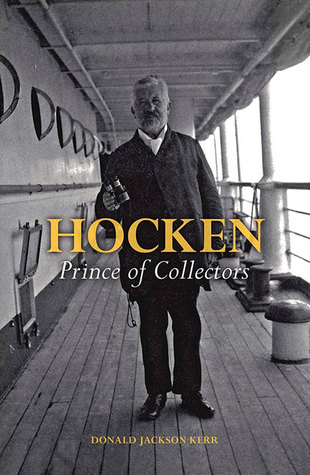
Hocken: Prince of Collectors Otago University Press - RRP $59.99

Dr. Thomas Morland Hocken (1836–1910) arrived in Dunedin in 1862 at the age of 26. Throughout his busy life as a medical practitioner he amassed books, manuscripts, sketches, maps, and photographs of early New Zealand. Much of his initial collecting focused on the early discovery narratives of James Cook, the writings of Rev. Samuel Marsden and his contemporaries, Edward Gibbon Wakefield and the New Zealand Company, and Maori, especially in the south. He gifted his collection to the University of Otago in 1910. In this magnificent piece of research, Donald Kerr examines Hocken’s collecting activities and his vital contribution to preserving the history of New Zealand’s early postcontact period.

Finally, a really dense, in depth examination of one of New Zealand’s greatest bibliophiles.  Kiwis it seemed started publishing very early in the life of the Colony.  Not surprisingly, our desire to document and recors, to measure and observe and, of course, express our mind was pretty keen from the get-go.  And it’s collections like that at Otago’s Hocken Library that pay a unique tribute to that fact.  On my bookcase sits Taschen’s 1001 Books You Must Read Before You Die.  I reckon the collection of Dunedin  Dr T. M. Hocken would be well over that number.  He arrived in Dunedin in 1862, aged 26 and started collecting almost immediately.  His collections were vast and specialised, Over about 48 years he’d amassed a huge set of books, manuscripts, pamphlets, maps and sketches on common and rare details of New Zealand’s early history, which he kept at his house “Atahapara” on Moray Place, Dunedin.  His original focus was Captain Cook and early exploration narratives of the Reverend Samuel Marsden and his contemporaries; Edward Gibbon Wakefield and the NZ Company; histories of the South; early Maori encounters; and general writing on early NZ’s early histories in general.  There are also wonderful maps from Colenso’s expeditions and other early artefacts. 


Hocken had two main contemporaries in book collecting: Governor George Grey and Alexander Turnbull.  Biographer Don Kerr  has done a magnificent job not only documenting the life of Thomas Hocken but he also provides insights into the intimate life of the man and offers some profiling on the particular difference between these collectors and their particular collecting habits and drive.  For instance, in the forward Kerr notes that Turnbull was “interested in books as object.  He had them bound and embellished in London by the superstar craftsmen of the day and built a collection about the history of the book and book arts around them.”  Kerr suggests that Hocken took a different approach: “...a far more practical approach, developing a collection primarily as a database to use in e was also a proper book nut: a bibliographer.  His first work on the subject was A Bibliography o the Literature relating to New Zealand (pub July 1909).  It was one of his many talents.  He was a father, an explorer and a pioneering doctor in the South.   


He was well respected in Dunedin and in New Zealand being employed for a range of unique roles for the colony’s early endeavours.  For instance in 1898 Hocken, Kerr tells us, became a commissioner of the Otago Settlement Jubilee Exhibition, marking 50 years of the province's settlement. A few year’s later, in 1903, he travelled to Japan, Greece, Egypt, and Great Britain to conduct his own archaeological and historical research and whilst in Britain, he collated documents relating to the New Zealand Company and New Zealand Mission which he brought back to New Zealand.  It’s because of Hocken that we know so much about Marsden and Wakefield and managed to secure a large number of them and bring them back to New Zealand.  And he continued to be an educator and promoter giving lectures on a vast range of topics, researched from his collection.  One in particular, Kerr reminds us, was The Letters and Journal of Samuel Marsden, now regarded as a pivotal work on the man. 


And it all continued throughout his life.  In 1010, at his funeral, the entire of Dunedin turned up to pay respect and not long after the pressure went on to bring the vast collection under the wings of the Otago University.  The Hocken Library became a legacy, valued well beyond any money.  Early leaders William Pember Reeves saw the value in this amazing archivist and his collection.


Kerr has fully detailed not only Hocken’s life (b.1836-d.1910) but his collecting activities, and more importantly his legacy to the intellectual and cultural development of our country.  The notes, footnotes and index must be at least ¼ of this 424page tome.  They also include a range of colour plates, photos and images that illustrate the collection, the times and the topic.  Kerr’s own bibliography for this work is over 30 pages alone!  But there’s also plenty of leads for anyone wanting to explore individual books or writings.  This has a massive vault of breadcrumbs for both professional and amateur researchers to follow – just like Hocken intended, I think.


And there’s no doubt that Kerr’s the right book geek to make all this happen.  He’s the Special Collections Librarian and the co-director at the University of Otago’s Centre for the Book.  He’s studied Grey and intellectuals like, Henry Shaw Frank W. Reed and Esmond de Beer and he’s already embarking on another project – 12 contemporary Kiwi bibliophiles.  Kerr’s created a book that is more than a biography or a Uni text – it’s a starter for research that could be a catalyst for your own private collection.  Perhaps it’s a taster to hunt out a few documents at your local antique shop, or to pay more attention during The Antique’s Roadshow. 


But a final question I have for Kerr, as I write this, is this:  In the digital age, without the need for bookshelves how will the bibliophiles of the future collect and what will that be.  Is the love of books the same as a love of reading?  Can our personalities and heritage still be conveyed in what we choose or choose not to read and store?  In other words do libraries and book collections still matter?  What do you think?   
 
 
http://www.otago.ac.nz/
 

Monday, June 29, 2015

Groove Book Report: The Bones of You - Debbie Howells - MacMillan

Rosie was beautiful, kind and gentle. She came from a loving family and she had her whole life ahead of her. Who could possibly want to harm her? And why?

Pan Macmillan has won a six-figure auction for psychological thriller The Bones of You by Debbie Howells.  Trisha Jackson at Pan Mac signed UK and Commonwealth rights in the book and a follow up from Juliet Mushens at the Agency Group.  It was the book, which Mushens took from the agency's slush pile, is described as 'Lovely Bones' meets 'Sister'.  The book opens with the murder of an 18-year-old lass, Rosie, living in the most idyllic village in Sussex.  The impact is devastating, especially one young mother, Kate, who is sure there is more to the death than meets the eye.  This is not an accident, she surmises.  The reader is left to figure out who would murder this young girl and why.  The story was artfully told from alternating points of view and time frames. tackles some dark undercurrents in family life in a very clever way, don't expect reveals and twists to hit you in the face, it's more like they creep up upon you until you gasp with shock as truth is revealed.  This is a very steady paced book with an intricate plot that is written with great care. 

The main characters are Rosie herself, and her parents Neale and Jo. Neale is a world renowned TV reporter and we are told millions of women around the world are in love with him. I have to say that I didn’t buy that at all, to me he just comes across as a smarmy git. He is the sort of man who my husband would walk to the other end of the bar in the village pub, to get away from.

This was a book that caused a frenzy of activity, akin to a JK Rowland release.  The novel sold in the Netherlands within 24 hours of submission, and was pre-empted in Brazil, selling six figures at a German auction.  It quite simply has all the ingredients for a bestseller: a strong hook, a compelling narrative and intriguing characters.

Howells has previously self-published novels, but 'The Bones of You' is her first attempt at a thriller. No bad for a woman, who's day job is a florist and chic-lit writer.  

Groove Book Report: Ardennes 1944: Hitler's Last Gamble - Anthony Beevor, Penguin Random House

Could this be the best critique of Hitler's last stand crackpot scheme to defend the Empire of the Third Reich?

The events leading up to Victory in Europe, May 1945, is one that's so clearly well known that it's t forget that – at the time – most Europeans were most people expected the war to finish much sooner than it really did. the Third Reich looked defeated by mid-1944 and in the east, the Russians were steamrolling their way to Baltics, Poland and Hungary at breakneck pace. Over in the west, the American and British armies lost no time clearing France and Belgium within only a few months of their Normandy landing.  Over by Xmas it was proposed.  Yeah.  Nah!

In-fighting and a certain level of incompetent leadership bubbled through the Allies, slowing the advance.  Hitler's army was decimated and hopelessly outnumbered but exceptionally stubborn, they were not giving in.  The Allies' insistence on unconditional surrender and the US bravado claiming Germany would become an agrarian wasteland further fueled Nazi propagandists.  It encouraged the most despicable patriotism, with the enlistment of an entire underage army of boys to defend the Fatherland.  they were dragged away from their mother's bosom to 'man' anti-tank guns and take up arms against the invaders.  Some of the most atrocious acts of cowardly genocide against Jews and other 'detainees' in the camps occurred in this time, partially in pure retaliation.

What might have happened, had Hitler decided to pour his remaining forces into the defense of the 'rump' of Germany? We'll never know.   Because he was now playing a final card: to launch an offensive into the Ardennes by chucking absolutely everything into a quick assault through the forest of Southern Belgium, and a grab-back of Antwerp and the division of the Allies.  It should force the English into a second Dunkirk style retreat. There was hope that the known backbiting between Bradley and Montgomery et al would morph into something bigger and Germany to claw back victory from the jaws of defeat.  Hitler's hero, Frederick the Great, after all had extracted Prussia from the threat of annihilation in the Seven Years War, in exactly the same way.  He was convinced it could work for him, too.

Yeah.  Nah.  Again.  Really?  Nobody outside the bunker believed that this nutty scheme would work.  Germany's half-starved army of old men and untrained boys and conscripts were in no position to argue and no position to win.  Duly, they were bogged down near Dinant, miles from Antwerp.  Never a real threat. Still Allies were given a mighty fright! Beevor notes that it was odd that they had left themselves so unprotected in the Ardennes, given that the Prussian army in 1870 and the German army in 1914 and 1940 had invaded France from precisely this point.

Beevor's account is just wonderful - "as good on the rows behind the front lines as he is on the battles themselves", wrote the Guardian and I'll have to agree.  He starts with the grating friction between those two preening, jealous generals, Generals Montgomery and Omar Bradley, the USA's commander of Allied forces to the South.  He's especially damaging of  Monty making him out a  drama queen with a loose mouth, and a thorn in the side of the equally bombastic  Churchill a good deal of trouble. Montgomery's floundering attempts to assert Britain's efforts clearly 'p'ed off the Yanks.  Beevor maintains the legacy with the American's coldness towards Britain when the Suez crisis came about ten years later.

Ten days, this was an offensive resulted in many unnecessary deaths, but otherwise achieved nothing. By Christmas Day 1945, the great gamble was over. The only real result, Beevor notes, was to completely drain Germany's Eastern front of all defenses and expose it to the devastation of the the Red Army's steamroller. The sole beneficiary of Hitler's last gamble was Stalin, who was able to push further and faster into Eastern Europe and advance the process of communist take over that set up the Cold War for ever forth with.  This at once a 'Boy's Own" account of thrilling and daring, a wargamer's bible, for arguments and dice role patriotism and a god accessible read for those like myself, who have a passing history in military history.