Thursday, April 18, 2013

Liner Notes (18/4/2013)

New Work from Rattle Records


Tim Gummer, Keith Hill and Steve Garden shared a vision for a music label that would champion a carefully chosen but diverse range of contemporary instrumental music - compositions and performances unfettered by commercial pressures or constraints. Tim and Steve operated a small recording studio in downtown Auckland where Gitbox Rebellion and From Scratch were recording. Inspired by European music label ECM (and New Zealand's own maverick label, Flying Nun), Rattle sought to create an empathetic framework for music that wasn’t adequately supported by the labels of the day.

Encouraged by the critical success of Pesky Digits and Songs For Heroes, we recorded a number of composers and performers for our next release, the compilation CD, Different Tracks. This album set the tone and direction for the majority of projects that followed. The first was Te Ku Te Whe, the seminal debut of Richard Nunns and Hirini Melbourne.  Since then Rattle has gone from strength to strength - you can read the whole story here ...


Mantis - Reuben Bradley

MANTIS is a celebration of the music and memory of Drew Menzies. These recordings are by no means definitive. They are an example of how open Drew’s compositions are, and a representation of the collective response to his music from the assembled musicians and arrangers.


Reuben Bradley’s vision for this project was so infectious that each collaborator were willing to take time out of their busy (in some cases crushing) schedules to freely support Reuben’s aspirations. The results speak for themselves – warm, lucid, generous performances, captured and presented with great affection and skill. But the primary motivation for their unconditional support for the project was the memory and music of a much loved and dearly missed friend.

“In 2007, Drew and I talked about the huge scope possible in arranging for string quartet and jazz quartet. Searching for a way to bring recognition to Drew and his music, I remembered our discussions and decided that his music would suit such arrangements – a fantastic way to showcase both his jazz & classical sides.” – Reuben Bradley.

“After Andrew left for America, we found several hand written manuscripts in our rubbish bin at home – these were all recovered and have been included on the recording. We are both pleased and proud to know that people will get to hear Andrew’s music due to the dedication and commitment of his friends.” – Glenda & Peter Menzies

Click here to learn more ...

The Gaia Theory - Omar Carmenates

THE GAIA THEORY is inspired by of the scientific theory of the same name that contends all living and non-living things on Earth work together to sustain life. This controversial theory, named after the Greek earth goddess Gaia, suggests that each organism on the planet is intertwined with every other. The Gaia Theory seeks to demonstrate a similar connective force through music.


Every selection in The Gaia Theory was chosen for having a link with some aspect of our world. From the cross-cultural connections in the music of John Psathas, to the unique recycled found objects in Christopher Deane’s The Scavenger’s Footprints, it is my hope that my album provides a musical means to contemplate the significance of our relationships with each other and with our planet. - Omar Carmenates, 2012

All music performed by Omar Carmenates
with Brian Nozny and the Florida State University Percussion Ensemble
Justin Alexander, Luis Rivera, Sidonie Wade, Tommy Dobbs, Matthew Filosa, and Melinda Leoce

 
Under the artistic direction of Conservatorium Staff member, David Theak, the Jazzgroove Mothership Orchestra commissioned Canadian composer Dr. David Lisik to write an extended composition for jazz orchestra, featuring US jazz luminaries Alex Sipiagin (trumpet) and Bob Sheppard (saxophone). Walkabout was inspired by the James Vance Marshall novel, The Children. The ten movements of Walkabout form a unified suite that follows the original storyline yet work well as individual pieces, from the dramatic opening track (which establishes the core themes of the work) through to the complex but coherent closing piece, the rhythmically hypnotic, Ritual Dance.   Click here to learn more ...


Walkabout - Dave Lisik

Dave Lisik
Canadian composer and trumpeter, Dr Dave Lisik is Lecturer in Jazz Composition, Arranging and Theory at the New Zealand School of Music. Dave's diverse portfolio of compositions and arrangements includes 400+ works for jazz, classical and electronic groups of all types. His Dave Lisik Orchestra released a debut CD in 2010 entitled Coming Through Slaughter, featuring Tim Hagans, Donny McCaslin, Luis Bonilla and Matt Wilson. The Orchestra has two new projects underway, Origin of Species and Metropolis, both planned for release in 2013.

Bob Sheppard
A household name for saxophonists worldwide, Bob Sheppard has done it all. Superstar names such as Chick Corea, Herbie Hancock, Perter Erskine, Joni Mitchell, Steely Dan, Stevie Wonder and many, many, many legends pack his world-class resume. Splitting his time between Los Angeles, and New York, Bob's forged working relationships with the best musicians on both coasts and has appeared on several grammy award winning CD's most recently with Joni Mitchell.

Alex Sipiagin
Russian born, New York based trumpeter, Alex Sipiagin has a reputation as the leading post-bop jazz trumpet player in the world through his work with Dave Holland Big Band, Dave Holland Quintet and the Mingus Big Band. As a soloist, Sipiagin has released 11 recordings under his name, mostly with Criss Cross Jazz including his latest release "Destinations unnown", and has toured extensively throughout Europe, Japan and Russia as a bandleader and sideman.

The Jazzgroove Mothership Orchestra
Th Jazzgroove Mothership Orchestra is widely acknowledged as Australia's leading jazz orchestra and was nominated as Australian Jazz Ensemble of the Year in 2006, 2007 & 2009. Musically this ensemble represents many of the finest youngimprovisers Australia has to offer, and features original music from Sydney's most dynamic and creative large ensemble composers all packaged into one exciting super-ensemble. Individually, the orchestra's members have dominated Australia's top prizes over the last decade.

Flaubert's Dance - Phil Broadhurst Quartet


If the Phil Broadhurst Quartet’s previous outing, Delayed Reaction, was a little hesitant in places, this new album sweeps all uncertainty aside. The quartet is fully and confidently on their metal, and each of Phil’s Broadhurst’s new compositions are finely written, deeply attractive pieces. Cameron Sangster replaces Alain Koetsier on drums, Oli Holland and Roger Manins return on acoustic bass and tenor saxophone respectively, and trumpet player Mike Booth guests again on three tracks.


Where Delayed Reaction was a tribute to legendary jazz pianist/composer, Michel Petrucciani, the compositions on Flaubert’s Dance reflect a wide diversity of influences in Phil’s writing and performing, from Herbie Hancock and Keith Jarrett to Many Katché, Elaine Elias and Tomaz Stanko. The title track pays homage to Enrico Pieranunzi, First Shot updates the rhythmic feel of Herbie Hancock’s Toys (from Speak Like a Child), Integrity and Scoreless reflects Phil’s enthusiasm for the ECM label and the music of Katché and Stanko, Stretched by the joyful music of Elias, while Loping was written with a number of musicians and composers in mind.

While one might recognise the flavour of these giants of jazz peeking in around the edges from time to time, the music on this album resolutely belongs to Phil Broadhurst and his exceptional quartet. What’s more, this is a very mature piece of work, showing great style, concentration, articulation and beauty. Flaubert’s Dance is an autumnal gem, graceful and restrained, but with bags of passion and unfettered enthusiasm for jazz.

“Despite his many achievements, Broadhurst is not content to rest on his laurels, which is perhaps the key to his continued growth as a musician. [His music is] a testament to the global language of jazz, which crosses international boundaries with enviable ease.” – Florence Wetzel, All About Jazz


THE CAPITOL SESSIONS

The Rodger Fox Wellington Jazz Orchestra


Under the artistic and musical direction of Rodger Fox, the Wellington Jazz Orchestra is arguably the tightest, brightest, most musically literate exponent of big band jazz this country has seen. Their debut recording, Journey Home (featuring compositions and arrangements by ex-pat jazz-giant, Alan Broadbent), won Best Jazz Album at the 2012 NZ Music Awards, but this second album raises the bar even higher.

The Capitol Sessions marks Rodger’s 40 years of unwavering commitment to big band jazz, and it’s only fitting that it should have been recorded in one of the world’s great studios. As John Fenton so aptly put it in his liner notes, Capitol Studios is an iconic studio, where the ghosts of Les Paul, Nat Cole and Frank Sinatra hover over every note.

Thursday, April 11, 2013

The Vatican Diaries - John Thavis - Penguin

John Thavis is a journalist, an author and speaker specializing in Vatican and religious affairs. He is known in the trade as a “Vaticanista” - it's a 'calling' that became clear only after a circuitous career path. He is a Catholic, so that's useful. He has a background in archaeology, also good to know and he's been writing on the Papal City and it's many aspects for many years. You can read all about him on his website: http://www.johnthavis.com/biography

As a seasoned reporter Thavis takes us straight in through the tradesmen's entrance, on a Vatican visit that no regular tourist or amateur art historian would undertake. In the first chapter he's inspecting the Sistine Chapel and analysing the 'techno-chimney' - a high fallutin' gadget that ensure the right smoke is produced when a new Pope is elected. In fact the first chapter gives us the whole behind the scenes gossip, fact and reality of what happened that time around. You can imagine similar goings on during the latest pope-vote.

Often his info comes from the vantage of the reportorial fly on the wall. Thavis, who's now retired as the Rome bureau chief of the Catholic News Service, takes a candid and, I found anyway, agnostic look at the goings-on at Saint Peter’s. A good example is the problematic events that occurred at the Vatican Bank. This is a wonderful case study in mismanagement and ego-induced blunderings. We are talking major scandal! The Bank is a considerable worldwide enterprise with 400,000 priestly representatives. Thavis doesn't say it but the need is obvious to have some kind of overarching governance structure that holds the Bank's leader's to account. But of course No - this is the Papacy. Secrecy and Mystery also mask the fine balance between regular incompetence, egos and corrupting influences. This, Thavis always hints at but always leaves the reader to ultimately conclude for themselves that all has never, ever been right in the state of Vatican. Never is, never will be.

Now, much history resonates throughout all church events but Thavis only concentrates on the history he has witnessed firsthand, including the process of bell-ringing on the naming of a new pope and the work of various functionaries in the organization. There's also the fight to save a unique ancient cemetery against the need for more underground parking and how the matter of the Legion of Christ was bungled when their founder was exposed as a con artist. Also there was the matter of His Holiness turning a blind eye to an anti-Semitic bishop. Thavis also talks about his time on the road with the Pope, and mentions the ridiculous and futile visit by George W. Bush a couple of years back.

He also reviews, in much laboured and dedicated detail, the stalling of the canonizing of the late John Paul or Pius XII, whose dodgy wartime antics are still up for debate and scrutiny.

And, especially provocative are the chapters dealing with the mismanagement of a host of diverse sex scandals which just never seem to end and an appraisal of the opaque personality of Benedict. This is a man who seems, at least in public to be detached, disengaged and often distracted. Now, with the benefit hindsight, we know that his resignation was the thorough revelation of the character flaw. Essentially, Thavis will conclude, Benedict was not the man that should have become pope and when it all became too much he took to diving under the pews of the first monastery. Of course, like many in political life, a pope’s remarks are subject to considerable spin, “part of the great communications disconnect at the Vatican.” (Yet now, His Holiness has acquired the Twitter handle “@pontifex.” How it’s used remains to be seen.) We wonder how much of a seat warmer he really was. Thavis doesn't ask that question. I wish he had. Who's really running the VC and the Catholic world. Why do Catholic leaders, especially in Africa still promote abstinence over sexual education and protection methods? Why does the church still, still, still retain the vast riches, when it's flock remain poor, destitute in the third world, the second and now after the economic crisis the first world as well?

Given the recent papacy elections Thavis's book is timely, provocative and illuminating plus it's fully accessible to members of the faith and doubters alike. Unlike this reviewer he stays down off the high moral horse, which in retrospect, is the best way to travel!


Thursday, April 4, 2013

The Yellow Buoy - poems from 2007 - 2012 by CK Stead - Auckland University Press


Reading Stead's new collection, I was reminded of another of his poems: Sonnet.


Today the water is so still, so clear,

looking down through the window of my mask

it seemed for a moment possible to fall

through fifteen, twenty feet of crystal nothing

in which the small fish, fork-tailed grey and black,

or silver with the faintest touch of blue,

hang like mobiles in a grandchild's bedroom.


Who would dream this ambient element

could ever be harmful to health -

that such a rock-garden of weightless comfort

and the fatal reassurance of shifty light

might clap a bag over your breathless soul?

Here even the valley of the shadow of death

has taken upon itself the mantle of beauty.


It’s a clean and clear approach. It’s like lake water on a still warm morning. Stead is probably our best known novelist, poet, critic, teacher and all-around writer – after all his personal bookshelf has over 40 titles, and given his 80 years that’s a burn rate of 2 per year! Astounding. His practised fluency is evident in the The Yellow Buoy as the poems are controlled, structured poems. There’s the occasional meander off-topic, but always with an eye on the road and the clock. This literacy tiki tour has little time for toilet stops and lunch breaks as it is! There are no words wasted or energy expended unnecessarily on the part of the reader. That doesn’t mean he’s an economical write, just aware of the time limitations of his audience. I can’t see Karl penning the “Rhyme of the Ancient Mariner or some such…”

The Yellow Buoy is mostly set in Europe, where Stead spends spends several months of each year now. Italy, France, Croatia as well as Colombia and Venezuela all get a mention, but often returning to weave in references to Kiwi poets and New Zealand customs when the reader least expects it.


A recurring theme is the piwakawaka. In some Maori legends, the bird is a sign of impending death when it appears inside a house.

Stead mentions the famous Maori myth about how death goddess Hine-nui-te-po killed Maui because the fantail couldn't stop laughing as he tried to climb inside her, describing the twittering bird as "script-writer also of dark memorials".

More prosaically, he also talks about how a fantail likes to hover around his compost bin, waiting for the lid to be lifted so it can catch fruit flies.

So it’s no surprise that in Nine Ways of Looking at a Fantail, Stead has his ghostly fantail serve Katherine Mansfield and her long-time friend Ida Baker:

A visitor (Ida

would have said)

from the other


side, like the

butterfly that carried

Katy's secret


post-mortem codes

to the transcriber

of her letters.


Of course Stead’s a dedicated Mansfield scholar. He wrote the novel, Mansfield, on her life and is also compiling a collection of her letters and journal entries. Katherine Mansfield - Cornwall, May 1916 is set in the twin stone cottages where Mansfield, English novelist D.H. Lawrence and their respective partners shared a rocky relationship. The poem describes the fondness between Lawrence and Mansfield despite their firey clashes:


She's seen him beat his wife

he's watched her

emasculate her husband.

Between them there's no need

of lies or pretence.


The poem before it, Isola Bella, was written for the 2008 Katherine Mansfield Centenary Conference in London. In the poem, Stead rehearses what he would say to Mansfield if they met in Menton, near Provence - "Friend or foe?" she calls to him. I can see why Mansfield would appeal to Stead. Both writers strongly identify with New Zealand but prefer to spend large chunks of their lives overseas, and both prize clarity and directness in their work over all else.

This is Stead’s fifteenth collection and Mansfield is not the only writer he talks about. Many others known to me and others and some not, Eugenio Montale and Carlo Vita are referenced in some way. But fear not, this is a collection with enough depth to dive but shallow enough not to drown. And there are simpleobservations that don’t need much to appreciate like Names: about a cat Debussy and the fantasies of his owner to travel once the commitment of his life has gone.

When Claude Debussy

Died our friend

Ljuba who live in

Amsterdam

By the canal

decided from now on

Her life would be

Catless – no more

midnight serenades,

No more 2am. Scratching at the

window, no more

Visits to the

vet with frost-bitten

Ears and battle

Wounds. Now she would

Travel. She practised

Placenames aloud –

‘Grand Rapids’

‘Patagonia’

Savouring the sound –

Until, that is, a

ginger stray, half grown

With paws like

Lion cub came

By. His purr was consonant,

His growl spoke

Of the Caucasus. She

Called him Pushkin


To finish, I have to steal from the liner notes:

“These poems wisely urge the reader to stay alert, to pay attention , to the ‘poetic moment / so easily missed / so quickly lost ‘. “ Indeed!

You can read more about CK Stead on his biography page at NZ Book Council Website.

Friday, March 8, 2013

The Rosie Project by Graeme Simsion

I love this book. It borders on chic lit and I was worried that I'd be teased for going a bit gooey. I got the same feeling when I read Bridget Jones or watched "Love Actually". But some how this is so much better than this. The main character is beautiful, he's a real geek, an aspersers syndrome science geek. He is no Mr D'arcy. Now Don Tillman is a professor of genetics who realises that he's different to everyone else, but sees it as the rest of the world acting illogically rather than the problem lying with him. It seems relationships are a mystery so he decides to approach the issue of finding a wife in as scientific a manner as possible, by means of a detailed questionnaire to weed out the kind of women he doesn't want. He's very pedantic and driven, but he's not as obnoxious as say, Sheldon Cooper of Big Bang Theory. He has his laugh out loud moments spurred on by his purity - moments like blurting out in a lecture "We'll now hear from the large overweight woman in the back row." Yes, subtly is someone else's game. Yet at the end the need to be part of our universe, the one of regular humans drives him to develop a survey, much like a science project, to weed out the women he doesn't want and get to the essence of his desire: the perfect breeding machine for Don (cue silhouette of a woman in a bright neon halo!). Then along comes our protagonist, Rosie who naturally, ticks all the wrong boxes, but is somehow strangely attractive and for her own reasons just won’t go away.


I wondered if I was the right audience for this - so I went surfing to test my masculinity on this subject - One reader gushed : "I enjoyed this book so much that I read it in a couple of big gulps (would have been one big gulp, but sometimes work just gets in the way) and then was sorry that it was over so quickly. A couple of weeks after finishing it I’m still thinking about it from time to time and wondering what might be happening to the characters, which is always a sign of a wonderful book. I’d love to read more about Don and Rosie and would definitely buy a copy of any sequel." Another admitted: "There is no doubt "The Rosie Project" is going to be one of the best feel-good novels of 2013..with it's humour and quirky characters, it's going to find a place in your heart..."

High praise, ladies. Don is a wonderfully drawn character who, despite giving a lecture on Asperger’s syndrome doesn’t see that he fits under his own subject heading. In fact he really sees himself as being entirely logical (think Spock - logical) or as someone who approaches the world in the ideal way. But when he comes up against others who are very different to himself the results range from touching to hilarious (the-disturb-the-lady-next-to-you-on-the-train-laugh- out-loud-variety) . There were moments I should have cringed when Don’s misunderstanding of social expectations and inability to see more than the strict meaning of words puts him in the full path of oncoming embarrassment and social clangery. I felt no sympathy for him. Should I? Perhaps I'm really just evil underneath. Damn you, Graeme Simsion for exposing this flaw in my personality!

The interactivities between Don and Rosie is well done. All characters seem to seamlessly influence each other, for good or bad - a real group and not just a collection of unconnected individuals as so often happens in fiction.

As I said earlier Don is not Darcy, or Sheldon. He's real enough that I might actually know him - another person with individual quirks. And unlike every third novel or tv show these days he doesn’t see him as wrong or broken. Let's not forget that Sheldon is portrayed one-dimensionally. Don is always real and always true to his own rules and view of the world. He also learns and grows as person during the course of the book (but don’t want to give away the plot so won’t say any more on that topic).

The book gently points out that we’re all broken to some extent or other, but that doesn’t mean we can’t find love or friendship. Mmmmm. That all sounds a bit heavy and serious. Down to it though, The Rosie Project is all that but also a light book about big and deep issues. It'll make you laugh and make you learn about yourself as well as about others.

Should blokes read it? Well, yes actually. Like I said before this is not chic lit. It's published in Australia but written by a Kiwi (ok, he lives there). It's about a bloke who's a bit quirky - but hey aren't we all in that way. Most books our wives and girlfriends pass over are about getting guys to understand women. This one is about guys understanding guys in the context of them selves AND women. So yeah, go ahead blocks, crack and tinnie and turn

Friday, March 1, 2013

The Childhood of Jesus by J M Coetzee Text Publishing

The Childhood of Jesus

by J M Coetzee

"The child is silent. For a while he too is silent. Then he speaks. ‘Please believe me—please take it on faith—this is not a simple matter. The boy is without mother. What that means I cannot explain to you because I cannot explain it to myself. Yet I promise you, if you will simply say Yes, without forethought, without afterthought, all will become clear to you, as clear as day, or so I believe. Therefore: will you accept this child as yours?’ "


There have been plenty of books written by authors that have won the Booker Prize. Some, in this writer’s opinion are bolllocks. Does that sound harsh. Does it sound rude. Am I just being an enfant terrible, pushing against those corporate pricks that attach awards to books to sell more product, like movie makers attach their Oscar Nominations, or winemakers attach their show medals. How does the notoriety of one of the world’s most distinguished prizes for literature give any clue as to why you should read this or any prize winning book?

Well, it doesn’t. So what I want you to do is forget that this particular author, J M Coetzee, has won the Booker Prize twice and, 10 years ago, the Nobel Prize for Literature. Clear your mind of the media noise. Pretend you just found this on the shelf, in a plain cover, with no reference points to his great 1999 work Disgrace, or even his latest 2007’s Diary of a Bad Year or even his fictionalised memoir Summertime of 2009.

Well, this is what I did. And this is what I found. The Childhood of Jesus is narrated in present tense, it’s located in no identifiable time or place, and possibly actually in the afterlife. Simón, 45yrs David, aged around 5yrs, turn up at a relocation centre in some undetermined Spanish-speaking country, with nothing but the clothes on their backs, and in search of shelter. David is not Simón’s son, but Simón insists he is his guardian. And so they are placed in an empty hostel room. Simón becomes a dockside worker, hauling grain sacks at the city wharves.

“Why are we here?” asks the boy. “I don’t know what to say,” Simón replies. “We are here for the same reason everyone else is. We have been given a chance to live and we have accepted that chance. It is a great thing, to live.”.

As the book unfolds we learn that their arrival follows a sea voyage which wiped them clean of all memories of their old life. On board, the boy carried a letter in a pouch around his neck, that may have identified his family. Yet this gets lost. Simón, though, is set on tracking down the boy’s mother somehow. David makes friends with a boy called Fidel and a carthorse at the wharves he calls El Rey. Simón strikes up a sexual but low-key relationship with Fidel’s mother, Elena — for in this new country, there is no love, no desire, just goodwill, rationality and a dull, vegetarian diet, to his frustration. Then Simón sees a woman, aged about 30, playing tennis, and he is convinced that she must be David’s mother. Inexplicably, the woman, Ynes, accepts — and takes over Simón’s flat. David is a strange, self-possessed, convinced that he can do anything. At school, his behaviour is considered disruptive and he is sent away to a residential reformatory — but escapes. Simón and Ynes join forces to run away and start a new life in a distant town called Estrellita (Little Star). And there the novel ends, unexplained. This is it. What does it mean. Why is it there. I’m confused.

It’s a puzzling tale presented in the most level way, with much of the narration presented through dialogue. The prose is the clear and flat style that Coetzee has perfected, which can seem artless but is modernity it’s self. It’s like Le Courbusier was with architecture – stark, functional and yet beautiful in its simplicity and cleanliness. Coetzee is the master of spareness and thrif.

One one plain here is the childhood of Jesus, translated to another world. Jesus was of the House of David, of course. This mother, who is yet not his mother, is in some form the Virgin. When David first arrives with Simón, they’re informed “There are no rooms free.” When he witnesses violence at the docks, he tells Simón: “You must never fight” and does not flinch when Simón “feints a slap to his cheek”. When a schoolmaster challenges him to write “I must tell the truth” on the blackboard, he writes instead: “Yo soy la verdad. I am the truth.” (cf. John, 14.6) When the horse, El Rey, is put down, Simón tells David he has gone to another world where there is no more weeping. “ ‘No more weeping,’ says the boy, and perks up, and even gives a jaunty little smile.” (Isaiah 25.8, Revelations 21.4). And on it goes.

In a sense this is Coetzee modus operandi of late. He’s crossing genres: essays become novels; memoirs to fiction. Then again Adelaide 73 year old author has recently men to go into teaching small children. “It will be good for you, good for your soul, to be with small children,” he told his audience. “Most of the people you deal with in your work are not real human beings but shadowy figures playing roles and wearing masks … Children are never anything but their full human selves.” Here, when Simón asks Elena what good is a new life if we are not transfigured by it, she replies that he should take his lead from children who live in the present: “Instead of waiting to be transfigured, why not try to be like a child again?” Alternately, “Truly I tell you, unless you change and become like little children, you will never get into the kingdom of heaven.” (Matthew 18.3).

What I don’t get is what was the point of all this. If the story of Jesus is just a story to provide backfill to the Man that because the scourge of the Romans, The Jewish Priests, the leader of Christians and the hated of other religions then what’s the point. Why reinvent the story. Actually what’s really going on here? Why was this written? Really, tell us - cos I’m lost !

Overall this novel is a lucid, frustrating, confusing, beautiful mess. Or as I said earlier possibly a load of literacy bollocks!

Thursday, February 7, 2013

My Guest tonite - Cajun Queen - Anne Savoy

Ann Savoy is a musician, an author, a record producer, and a photographer. Perhaps her most well known endeavor is the acclaimed release “Adieu False Heart”, a CD of duets with the legendary Linda Ronstadt. As a musician she, has played guitar, fiddle, and accordion and traveled throughout the world with her husband accordionist Marc Savoy and fiddler Michael Doucet in the Savoy Doucet Cajun Band, with her all-woman band The Magnolia Sisters. and with Marc and their talented sons in the Savoy Family Band.


She appears with her son Joel in the film Divine Secrets of the Ya Ya Sisterhood and performs three of the twelve cuts on the accompanying soundtrack on Sony Music. She has recorded twelve CDs on the Arhoolie, Rounder, and Vanguard labels. She workied with renowned producer T Bone Burnett as associate music producer for the Sony film “All The King’s Men”, composing a song for the film which is performed by Ann Savoy and her Sleeplss Knights, her vintage style jazz group. Ann has appeared in many documentaries on the subject of Cajun music, including the PBS series American Roots Music, and with her husband was the subject of Les Blank’s film,”Marc and Ann”.

She has worked as an record producer for Vanguard Records, for whom she produced the Grammy nominated tribute to Cajun music, Evangeline Made, featuring, among others, pop and folk idols Linda Ronstadt, John Fogerty, Richard and Linda Thompson, Nick Lowe, and Rodney Crowell performing traditional Cajun tunes. Her second project for Vanguard, a tribute to Creole and Zydeco, entitled Creole Bred, came out in May 2004.

In 2010 her band The Magnolia Sisters received a Grammy nomination for their CD Stripped Down.

As a writer, she is the author of the Botkin award winning book, Cajun Music, A Reflection of a People, a book which chronicles the history of Cajun and Zydeco music through interviews, biographies, historic and current photographs, and song transcriptions. She wrote the chapter on Cajun and Zydeco in the book, American Roots Music, Rolling Stone Press, as well as authoring numerous articles on Cajun music and historic CD booklets.

For more, go to www.womad.co.nz


FAB - Richard Taylor

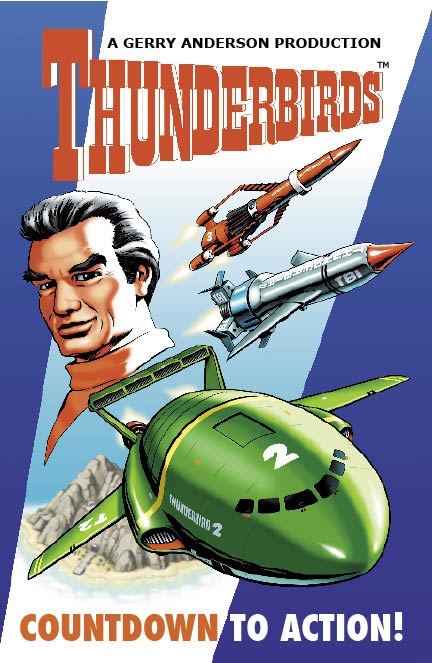
The classic British sci-fi series “Thunderbirds” will receive a high-tech reboot at the hands of New Zealand’s Oscar-winning Weta Workshop, it was announced on Tuesday (5/2/2013).  The special effects company, which has worked on movies such as “The Lord of the Rings” and “Avatar”, said Britain’s ITV had commissioned 26 episodes of the 1960s hit show, created by the late Gerry Anderson (left).  The series, with the working title “Thunderbirds are Go!”, is scheduled to screen in Britain in 2015, 50 years after the original debuted.  Weta chief Richard Taylor said he was looking forward to introducing a new generation to the show, which depicts an international rescue organisation that thwarts evil-doers with spacecraft launched from its secret base.  “Thunderbirds was a hugely influential television series in my childhood,” said Taylor, whose Wellington-based Pukeko Pictures will co-produce the new series.  While the original used a form of puppetry dubbed “Supermarionation” to bring characters such as Brains and Lady Penelope to life, the new version will combine live action and computer generated imagery.

All about Thunderbirds (everything!)

The Thunderbirds TV series is set in the 21st century, which at the time of production was still over thirty years away. Co-creator Anderson said for the series to be set "100 years in the future," indicating a date of 2065, despite varying years showing up on various objects throughout the series. This intent was carried forward in all of the series' contemporary tie-in merchandise, such as the weekly comic strip in TV Century 21 and the Century 21 Mini-Album "Thunderbird 3", wherein Alan Tracy tells listeners that the year is 2065. 1993 vintage champagne is discussed in "Alias Mr. Hackenbacker". The feature film Thunderbirds Are Go is shown to take place in June 2066, and in Thunderbird 6 it is June 2068. In addition, the Zero X spacecraft from Thunderbirds Are Go subsequently appeared in the opening episode of Anderson's next TV series, Captain Scarlet and the Mysterons, which was set in 2068. 


The show depicts the adventures of the Tracy family, which consists of millionaire former astronaut Jeff Tracy (one of the first men to land on the moon) and his five sons: Scott (pilot of Thunderbird 1 and principal rescue co-ordinator), Virgil (pilot of Thunderbird 2), Alan (astronaut in Thunderbird 3), Gordon (aquanaut in Thunderbird 4) and John (principal duty astronaut on the space station Thunderbird 5) – each named after a Mercury astronaut – Scott Carpenter, Virgil Grissom, Alan Shepard, Gordon Cooper and John Glenn, respectively. Together with Jeff's elderly mother called Grandma Tracy, the scientific genius and engineer "Brains", the family's manservant Kyrano and his daughter Tin-Tin, the Tracy family live on a remote, uncharted island. 

International Rescue's London agent, international socialite Lady Penelope Creighton-Ward, and her Cockney butler/chauffeur Aloysius "Nosey" Parker, are often seen chasing The Hood and other villains in the pink, amphibious Rolls-Royce FAB1, which is equipped with James Bond-style gadgets. (Rolls-Royce actually provided an authentic radiator grille to the production company for closeups of FAB-1, such as when the retractable machine gun was fired.) Lady Penelope's yacht is called FAB-2. Although credited as "London-based Agent", Lady Penelope lives in a mansion in Kent, which is actually a miniature copy of real-life Stourhead House in Wiltshire.

Some of the disasters attended by International Rescue are often the result of accident or misadventure, but on occasion involve deliberate sabotage. A recurring villain, "The Hood" (actually never named in the dialogue, but referred to as such in narration, in the comics, tie-in books and other spin-off media), frequently causes major accidents in order to lure International Rescue's vehicles to the scene and spy on or steal them. Although never credited as such, two characters would have recurring roles in the series, with London Airport controller Commander Norman appearing five times. Fireflash pilot Captain Hanson would appear five times as well, though three of his appearances were part of reused or archive footage.

The main characters' appearances were modelled after prominent actors. Jeff Tracy was modelled after Lorne Greene of Bonanza fame, Alan after Robert Reed, Scott after Sean Connery, and John after both Adam Faith and Charlton Heston. 


The Thunderbirds' radio code "F-A-B", meaning "message received and understood", did not stand for anything, it was just supposed to sound "hip". In fact, when asked what it stood for, Gerry Anderson once replied, with some bemusement, "Fab", as though it were obvious. Later, due in part to fan-submitted stories, F-A-B came to mean Fully Advised and Briefed, in keeping with P-W-O-R (Proceeding With Orders Received), a similar radio confirm code in the Stingray series.
UniformAll the Thunderbird pilots wear a common mid-blue uniform consisting of a polo-neck tunic, trousers, boots, and a simplified side cap. The uniform is accented by a sash bearing the International Rescue insignia and holding a sidearm and two pouches. Each pilot's sash is a different colour, and they have matching coloured cuffs to their boots:

Scott – Light Blue
Virgil – Canary Yellow
Alan – White
Gordon – Orange
John – Lilac
Occasionally other members of the organisation are shown in similar uniforms:


Brains
 Brains – with a brown, leather-like sash, seen only when he flies the Tiger Moth biplane in the 1968 film Thunderbird 6.

Jeff Tracy

Jeff – a metallic gold sash, carrying the logo badge for the Dr. Barnardo's children's charity. Never actually seen in the series, this was used in publicity for the film Thunderbirds are Go (1966), and later reproduced in books and the DVD boxset.

Tin Tin


Tin-Tin - for her single designated rescue mission aboard Thunderbird 3 in the episode "Sun Probe", and briefly in "The Uninvited", she wore a similar blue uniform with a pale blue belt but no sash.


MachinesMain article: Thunderbirds machines
Each episode featured model vehicles and machines primarily designed by special effects director Derek Meddings; in particular, the five Thunderbird craft:

Thunderbird 1 – Hypersonic variable-sweep wing rocket plane used for fast response, rescue zone reconnaissance, and as a mobile control base.

Thunderbird 2 – Heavy supersonic VTOL carrier lifting body aircraft used for the transport of major rescue equipment and vehicles, including Thunderbird 4.

Thunderbird 3 – Re-usable, vertically-launched SSTO (Single-stage-to-orbit) spacecraft used for space rescue and maintenance of Thunderbird 5.

Thunderbird 4 – Small utility submersible for underwater rescue.

Thunderbird 5 – Space station in geostationary Earth orbit monitoring broadcasts around the globe for transmissions calling for help; also manages communications within International Rescue.


Production - Conception
Commissioned by Lew Grade of ITC Entertainment, Thunderbirds was the fourth Supermarionation children's series to be made by AP Films. The logo of Supermarionation had previously introduced episodes of Supercar (1960–61), Fireball XL5 (1961–62), and Stingray (1962–63). Gerry Anderson's inspiration for the underlying concept of Thunderbirds was the West German mining disaster that later came to be known as the Wunder von Lengede ("The Miracle of Lengede") – on 24 October 1963, the collapse of a nearby dam left the iron mine at Lengede, Lower Saxony, flooded and 50 men trapped underground; by 7 November, 21 had been rescued. The heavy equipment required to rescue the miners was located far from the mine itself, and the time needed for transport proved to be a major hindrance in ensuring the survival of the men.
Hoping to distinguish this idea from the premises of the first four puppet TV series he had produced, with plots that would appeal as much to adults as to children and an early-evening transmission slot, Anderson retired with his wife Sylvia to their holiday villa in Portugal to develop the premise and script the pilot episode. The title Thunderbirds derived from a letter posted by Anderson's deceased older brother, Lionel, while he was serving as an Royal Air Force pilot based in Arizona during the Second World War. In his letter, Lionel had made reference to a nearby United States Air Force base, Thunderbird Field. The working title had been "International Rescue"; drawn in by the "punchiness" of "Thunderbirds", Anderson elected not only to rename the series but also the fleet of rescue vehicles, which had originally been designated Rescue One, Two, Three, Four and Five.

Many members of the Thunderbirds crew had contributed to its direct antecedent, Stingray. For Thunderbirds, the production team was expanded, and the series was shot at APF's Stirling Road studio on the Slough Trading Estate. Production commenced in September 1964 and the series premiered on UK television on 30 September 1965 in the ATV Midlands region. Other ITV regions followed, ATV London commencing broadcasts on 25 December 1965. Two series were produced, comprising 32 episodes with a running time of 50 minutes. Each episode was also split into two parts for a half-hour slot, creating 64 episodes of 25 minutes' duration.

Thunderbirds was the first one-hour series to be produced by APF. A few months into production, Grade viewed the completed pilot episode, "Trapped in the Sky", at a private screening and was so pleased with the result that he instructed Anderson to double the length of the episodes from 25 minutes to 50 minutes. This initially proved to be a headache as eight episodes had already been filmed and scripts for 10 more had been written.

Voice cast
In developing the cast of characters that would appear in Thunderbirds, the first consideration of the Andersons, Reg Hill and John Read was the series' potential for transatlantic appeal.[13] As such, while the Tracy family destined to operate the Thunderbird machines would be American, the International Rescue organisation would depend on its British field agents Lady Penelope and Parker for the purposes of intelligence.

David Holliday (the voice of Virgil in the first 26 episodes) was the only American to be cast for a voice role in Thunderbirds, the remaining members of the voice cast being British, Australian or Canadian.

Australian actor Ray Barrett provided the voices of John Tracy, operator of Thunderbird 5, and The Hood, the arch-enemy of International Rescue, in addition to many supporting roles. He had worked for Anderson before, voicing both Commander Shore and Titan for Stingray. Drawing on the experience gained from radio work in Australia, Barrett was adept at performing a variety of voices in quick succession and could also perform both British and American accents convincingly. Although Sylvia Anderson or Christine Finn, the voices of Lady Penelope and Tin-Tin Kyrano, usually took responsibility for voicing female one-off characters, Barrett made an exception when, to the hilarity of his fellow cast members, he voiced the elderly Duchess of Royston in the episode "The Duchess Assignment".

Canadian actor Shane Rimmer (Scott Tracy) went on to appear in – and on occasion write scripts for – later Anderson productions. David Graham, one of Anderson's longest-serving voice actors, had previously worked on Four Feather Falls, Supercar, Fireball XL5 and Stingray and was also one of the original voices of the Daleks in Doctor Who in 1963. Graham supplied no fewer than four of the main characters' voices – Gordon Tracy, Parker, International Rescue's resident scientist, Brains, and Tin-Tin's father, Kyrano.

Voice cast
Peter Dyneley as Jeff Tracy, Commander Norman and various supporting characters
Shane Rimmer as Scott Tracy and various supporting characters
Ray Barrett as John Tracy, Alan Tracy (in one episode only, "Trapped in the Sky"), The Hood and various supporting characters
David Holliday as Virgil Tracy (Series One) and various supporting characters
Jeremy Wilkin as Virgil Tracy (Series Two, Thunderbirds Are Go and Thunderbird 6) and various supporting characters
David Graham as Gordon Tracy, Brains, Parker, Kyrano, Captain Hansen and various supporting characters
Matt Zimmerman as Alan Tracy and various supporting characters
Sylvia Anderson as Lady Penelope Creighton-Ward and various supporting characters
Christine Finn as Tin-Tin Kyrano, Grandma Tracy and various supporting characters
Paul Maxwell as various supporting characters (Series Two)
John Tate as various supporting characters (Series Two)
Charles Tingwell as various supporting characters (Series Two)
Maxwell (the voice of Zodiac in Fireball XL5), "Bud" Tingwell and Tate received no on-screen credit in either series, although Maxwell and Tingwell were credited for the films Thunderbirds Are Go (1966) and Thunderbird 6 (1968). Thunderbirds Are Go also featured two early voice contributions by entertainer Bob Monkhouse.

It has also long been rumoured that the opening "5 4 3 2 1 Thunderbirds Are Go!" voiceover was provided by Brian Cobby in 1965, who went on for many years to be the voice of the British speaking clock. While Cobby himself long maintained this and said he had even received repeat-fee royalties from the BBC, the assertion is rejected by the surviving members of the cast and by Gerry Anderson, all of whom are adamant that the voice is that of Peter Dyneley in character as Jeff Tracy. The general consensus is that Cobby provided the voice for a Thunderbird 2 talking alarm clock produced in the early 1990s and had a clouded recollection of events, but the rumour remains in general circulation.

Design and effects
The special effects supervisor for all Anderson's productions from Supercar to UFO was Derek Meddings, who went on to produce effects for the James Bond and Superman film series. For Thunderbirds, Meddings also found himself with the task of designing the primary vehicles after it was decided that former head designer Reg Hill would serve only as associate producer.

Scale models for a number of the Thunderbird machines were constructed by a professional model-making company, Master Models of Middlesex, while others were custom-made by Meddings and his team from commercially-available radio-controlled vehicle building kits.eddings was not satisfied with the concept of Thunderbird 2, which was originally to be blue in colour as opposed to green, until he inverted the aircraft's wings. The job of sculpting the largest scale model of International Rescue's heavy-duty transporter in balsa wood fell to Arthur "Wag" Evans of Master Models. Thunderbird 3, whose appearance was based on that of the Russian Soyuz rocket, was realised as a model that stood six feet (2 m) tall, although ultimately the largest model to be built for filming proved to be FAB 1, whose miniature needed to be big enough to fit the two-foot (0.6 m) marionette puppets of Lady Penelope and Parker. Seven feet (2.1 m) in length, the large-scale plywood FAB 1 model cost £2,500 to build in 1964; post-decimalisation, this is equivalent to £30,000.

One of the latest additions to the effects department for the production of Thunderbirds was Mike Trim, who became Medding's assistant in designing the vehicles and buildings that populate the world of Thunderbirds. The existing staff, managed by effects director Brian Johncock, was further expanded by the arrival of Roger Dicken, who had previously worked for the BBC Visual Effects Department. Meddings and Trim pioneered the technique of "customising" models and sets by applying pieces drawn from commercial model kits to add convincing surface detail. For example, the air-conditioning silos visible on either side of Thunderbird 1 in its underground hangar were originally 1960s periscope toys manufactured by J & L Randall. The Thunderbirds miniatures were also "aged" with paint and dust to give an impression of work-weary vehicles. These techniques became standard practice in the special effects industry and were put to use in the building of the miniature spacecraft and other vehicles for the films of the original Star Wars trilogy (1977–83).

One of Meddings' design innovations for Thunderbirds was a cyclical, moving effects stage (termed the "rolling road" or "rolling sky") to be used for sequences depicting aircraft flight, take-off and landing, as well as motor vehicles being driven along roads. Judging that the established method – pushing or pulling scale models across a static base or against a static background – no longer provided a satisfactory illusion of movement, Meddings came up with a new solution of his own that was first deployed during production on the pilot episode, in which International Rescue's remotely-operated Elevator Cars speed down a runway to assist in the controlled landing of the aircraft Fireflash. Meddings constructed a belt of canvas, stretched over rollers and driven by an electric motor. With the help of wires, the miniature Elevator Car models remained stationary on the "rolling road" and the Fireflash model was lowered onto the stage from overhead, simulating the aircraft's descent. Another system of rollers, this one painted to represent a sky background, was erected perpendicular to the canvas belt, and both roller motors were synchronised so that the speeds of the two design elements were matched. This process simplified the work of the camera and lighting effects teams, since the models did not move and sequences were easier to film and light. For shots of airborne aircraft, the illusion was enhanced by blowing smoke across the sets from a fan to simulate passing clouds, and by connecting the canvas belt at an angle to hide what would otherwise have been a visible seam. The "rolling road" system would later feature in the effects of a number of James Bond films.

Miniature explosions seen in the series required materials such as petroleum and fuller's earth. Originally filmed at high speed, the sequences were slowed to normal speed during episode post-production to achieve more persuasive results. For higher-quality rocket take-offs and landings, the effects department commissioned a UK firm to supply thrustless, solid-fuelled rocket canisters, in a range of sizes, that would burn for approximately 10 seconds and would be fitted inside the various scale models to produce convincing rocket exhaust effects.

Impressed by their work on Thunderbirds, director Stanley Kubrick employed several of the Anderson effects team as supervisors for his science-fiction film 2001: A Space Odyssey.

Music
Music for Thunderbirds was composed and conducted by Barry Gray, who scored all TV series produced by AP Films and Century 21 Productions up to the first series of Space: 1999. Gray's original master recordings for the Anderson series were rediscovered in a storage facility in Chelsea, London in 1993 but then lost again a few years later after being returned to then copyright holders Carlton Media International. They were subsequently located and used as the basis of two soundtrack albums released by Silva Screen in 2003 and 2004. A third album, featuring tracks from the other two in addition to previously unreleased material, emerged in 2005.

The Thunderbirds March and the "5–4–3–2–1" countdown that front the opening titles were adopted by British band Level 42 for its live shows, as captured in the video release of its 1987 performance at Wembley Stadium in London. An updated version, blended with the opening fanfare to the band's own hit "Heaven in My Hands", kicks off Level 42's concert gigs to this day. Similarly, the "5–4–3–2–1" countdown has been used by the Beastie Boys for its subsequent live shows; one instance of this is the Live Earth concert in London in 2007.


Also in 1990, television producer Gary Shoefield released an album of remixes titled Power Themes 90 under the name F.A.B., which featured techno remixes of the themes to many British TV programmes, many of them created by Anderson. Among these was Thunderbirds, whose theme was remixed under the name "Thunderbirds Are Go! (The Pressure Mix)" and billed as "featuring MC Parker". The theme reached number 5 in the British music charts. To accompany this, a music video compilation similarly titled Power Themes 90 was released, and "Thunderbirds Are Go! (The Pressure Mix)" was listed, featuring footage from episodes of the series interspersed with newly-filmed shots of the original Parker puppet dressed in "era" clothing and acting as a DJ.

Gray's original theme music, with lyrics performed by Gary Miller, was ultimately not used. Titled "Flying High", the song had been intended to accompany the closing titles, was abandoned in favour of the "Thunderbirds March" only weeks before the pilot episode was broadcast. However, a modified version of "Flying High" can be heard in the closing scenes of the Series Two episode "Ricochet".

Original broadcastA total of 32 episodes of Thunderbirds were made for the British production company ITC Entertainment, and first broadcast on ITV. The title card for the first series carries a copyright date of 1964, as this was the year the pilot episode, "Trapped in the Sky" was produced; the remaining episodes were made in 1965, with production of the second series following in 1966.

Thunderbirds ceased production very suddenly in the autumn of that year, six episodes into the second series. This was a decision made by Lew Grade after an unsuccessful trip to the U.S. to sell the programme. According to published reports of the incident, the three major television networks CBS, NBC, and ABC were all bidding on the series, and Grade felt he could play them against each other to gain a higher price. Unfortunately, when one dropped out, the others immediately followed. Although it was a genuine hit by that time, Grade still felt that the programme was too expensive to continue without the US market. The programme was instead shown in the US in television syndication with reasonable success.

Film adaptations
The popularity of the series led to the production of two full length feature films, with financial backing by United Artists. During the early 1980s, several Thunderbirds episodes were combined to create three Thunderbirds television films. In 2004, a live action adaptation of the series was released, almost 40 years after the original series first aired.


 Super Space Theater
In 1981, many of Gerry Anderson's series were re-edited into TV movies in North America. These were aired on TV under the series title Super Space Theater. Among these was Thunderbirds, with three TV films airing on American television in 1981. They were heavily edited, with new title and credit sequences, some scenes being removed for length and the insertion of extra incidental music throughout. These have not been seen on TV since, although they have been released on home video. The rights issues of these releases also prevented the episodes being released in their original form on VHS video until the 1990s.

Countdown to Disaster (featuring the episodes "Terror in New York City" and "Atlantic Inferno")

Thunderbirds in Outer Space (featuring the episodes "Sun Probe" and "Ricochet")

Thunderbirds to the Rescue (featuring the episodes "Trapped in the Sky" and "Operation Crash-Dive")


A live action feature film, also called Thunderbirds, and directed by Jonathan Frakes premiered on 24 July 2004. All the Thunderbird craft seen in the live action film were based upon the original designs, but with modern refinements, although a modified Ford Thunderbird was used as FAB1 due to BMW, owners of the Rolls-Royce marque, refusing to give permission for its use in the film. The live-action film had been planned as far back as the early 1990s, with the Baldwin brothers as four of the Tracy brothers and Anthony Edwards as Brains.[citation needed]


The plot sidelined the main series characters in favour of Alan, Tin-Tin, and a new character, Brains' son Fermat, who have to rescue the adults from the evil Hood. Coincidentally, both plots of the Supermarionation films Thunderbirds Are Go (1966) and Thunderbird 6 (1968) also focused on Alan, the youngest Tracy brother. The 2004 film was poorly received, by critics, fans of the TV series and at the box office, with the film opening in 11th place in North America. A North American DVD was released in late 2004. Although his ex-wife and series co-creator Sylvia vocally endorsed the film and attended the London premiere, Gerry Anderson denounced the film as "the biggest load of crap I have ever seen in my life."[17]

Merchandising Konami FAB1
Like other Gerry Anderson productions, having vehicles as the effective 'stars' of the show made it intrinsically 'toyetic'. Coming off the back of 'Beatlemania' and 'Dalekmania', the success of Thunderbirds generated accompanying merchandise that was quite unprecedented in both of range of product and diversity of its subject. Almost no form of toy, publication or food product marketed at children (peculiarly girls and boys alike) escaped a Thunderbirds related tie-in at some point in the 1960s (or since). One example, the Fab ice lolly, has been produced continuously for the UK market from 1967 to this day.

Several companies, including Matchbox and Dinky were licensed to produce die-cast metal and plastic toys based on the Thunderbird vehicles. They proved hugely popular and were one of the best selling merchandising lines of the decade. Original Thunderbirds toys are now expensive and highly sought after collectors' items.


Japanese kit forms of Thunderbirds vehicles continued to be produced into the 1980s. Toy company Bandai produced toys to coincide with the release of the 2004 live action movie in the UK. As of 2007, Japanese companies such as Aoshima, Konami and Takara were still producing new Thunderbirds toys based on the original series vehicles, including Takara's very expensive Thunderbird 2 model with lights and working motorised legs, which lift the fuselage, exposing the cargo pod.

To coincide with a BBC2 revival of the TV series in the 1990s, Matchbox manufactured a new range of toys, though they were generally marketed outside the US and in Canada. It included a Tracy Island model playset that became the UK's most sought-after toy, leading to a widespread shortage during the run-up to Christmas in 1992. It became headline news and the archetypal example of the mistake to be avoided by the whole toy industry every Christmas since. Such was the demand that the BBC children's television show Blue Peter instructed viewers on creating their own version from household materials. Remarkably, the free "fact sheet" that detailed this process also became so sought-after that it too became difficult to obtain.[citation needed] Further Matchbox toys accompanied the new movie.

In 2011, the British Royal Mail launched a commemorative Gerry Anderson stamp series, including Thunderbirds 2 and 5 and a hologrammed set of stamps displaying Thunderbirds 1, 2, 3 and 4 by tilting each of the four stamps back and forth.[18]


Possible revival (2005–2010)
In September 2005, a QuickTime video file titled Thunderbirds IR was released on several P2P networks.[28] It opens with music by Barry Gray and a few clips of the classic Thunderbirds 1 through 4 launching, then shows several scenes from an intended new Thunderbirds series from Carlton Television. The trailer made with a combination of computer-generated imagery and puppetry depicts scenes including internal sets, external settings, and a sleekly-redesigned Thunderbird 1, Scott Tracy, The Hood, and the rescue of a falling lighthousekeeper. Scott Tracy is seen to walk, and perform a backflip (making the tongue-in-cheek remark "Look, no strings!"). 
The trailer stated that a new Thunderbirds series would be coming in 2005 from Carlton Television and displays a phone number. The series was developed by Carlton with David Freedman as executive producer and David Mercer who was heading the Children's Department at Carlton at the time. Greg Johnson and Bob Forward were lead writers and Asylum did all the set builds and puppet work. Tim Field was line producer. Dave Throssel and a small team from The Mill TV Dept did the CG work. Steve Clarke directed the short. Gerry Anderson met the Carlton team in the early days of development and gave his full blessing. However, when Granada and Carlton merged, the series was shelved until further notice. 
On 29 August 2008 it was announced by The Sun newspaper that Gerry Anderson was planning a new computer generated series of Thunderbirds (after having produced a CGI reimagining of Captain Scarlet. Anderson was in talks with ITV for the rights to the original series. While Anderson believed a new series would eventually be made with his involvement, on that occasion ITV refused to return the rights.

Eleven months later in July 2009 Anderson revealed that ITV were still refusing to return the rights to allow the creation of a new series.

New series (2011–present)On 11 January 2011, a new series of Thunderbirds was announced by Gerry Anderson when he was interviewed on BBC Radio Five Live's Drivetime programme. He stated he was unable to say much as he had signed a non-disclosure agreement, but that the show was definitely being made. It will be in CGI, as opposed to puppetry, and because of Anderson's involvement as opposed to that of outside filmmakers. It would feature new locations but retain the Thunderbirds craft and characters, though it would be totally modernised. In The Sun newspaper of Saturday 15 Jan, he said that he had not yet written the first episode, but had 'fleshed it out' in his head.[34] Anderson died on 26 December 2012, leaving the future of the new series uncertain.

A press release dated 4 February 2013 confirmed that ITV Studios and Pukeko Pictures plan to re-invent the classic Thunderbirds series as twenty six, thirty minutes episodes, using a mix of CGI animation and live-action model sets, for CITV to be aired in 2015.

Heaps more on this subject is available here: http://en.wikipedia.org/wiki/Thunderbirds_(TV_series)